

I get it. Every dollar spent on promotion should come back with a friend. Smart promotion should come with guarantees. A dollar goes in, two come out. Why else would we do this?
“We’re really focused on ROI,” they say. I hear that line pretty frequently. But aren’t we all focused on ROI? Saying it in a meeting might feel savvy and shrewd, but it’s actually just the starting point — the bare minimum of running a business. Nobody’s out here rooting against a return on their investment.
And every time I hear it, I think the same thing: what that marketer really wants — understandably — is a guarantee. But that’s not how any of this works.
The Organic Fantasy
Here’s what I see over and over. A brand pours its heart into Instagram — or what it thinks is pouring its heart into Instagram — posting a couple times a week, slapping a logo on a Canva template, writing a caption that reads like a press release, and then wondering why nobody’s paying attention. The analytics come in: 47 likes from the same 47 people (half of whom work at the company) and no new leads. The conclusion? “Social media doesn’t work for us.”
But that’s not what’s happening. What’s happening is a platform with over 3 billion monthly active users and $67 billion in annual ad revenue isn’t in the business of handing out free attention. Instagram is a business. A massive one. And its business model isn’t charity — it’s advertising.
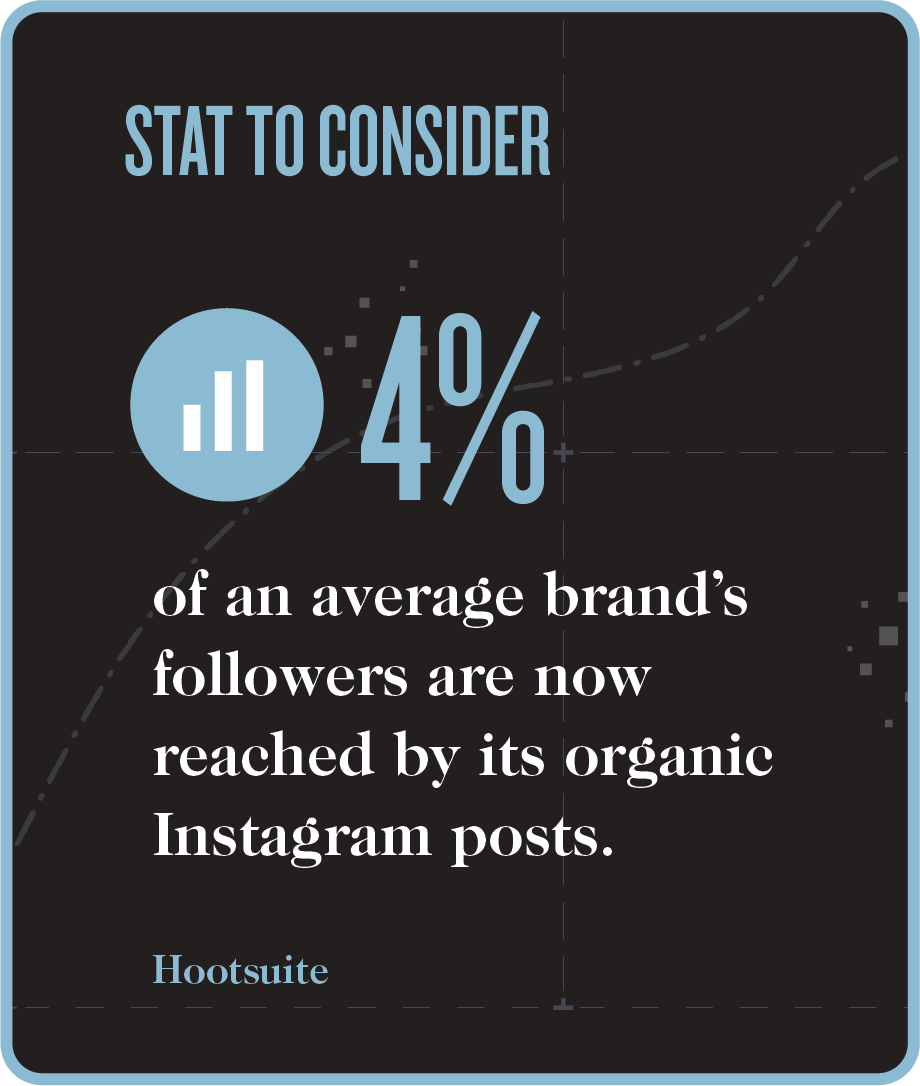
The data is sobering. According to Hootsuite, the average brand’s organic Instagram post now reaches roughly 4% of its followers. Socialinsider’s 2025 data puts it closer to 3.5%, with reach declining 12% year-over-year. For an account with 10,000 followers, that means somewhere between 350 and 400 people see a given post. And that number is shrinking every year.
Put differently: 96% of an already-built audience isn’t seeing the content. When the strategy is to go all-in on organic and hope for the best, that’s essentially whispering into a hurricane and hoping someone hears it.
The Gym Analogy Nobody Wants to Hear
Asking for guaranteed ROI on a $500 Instagram campaign is a little like going to the gym once and expecting to come home ripped. Or eating one salad for dinner and stepping on the scale the next morning expecting to be 10 pounds lighter.
That’s not how fitness works. It’s not how nutrition works. And it’s definitely not how marketing works.
Building a real presence on social media — actually building one, not just checking a box — takes repetition, experimentation, and yes, some investment (which can come in the form of losses). Not necessarily a fortune. But something. Because the price of learning isn’t optional.
Volatility Is a Fee, Not a Fine
I recently read Morgan Housel’s The Psychology of Money (which I would highly recommend by the way), and it got me thinking about some unexpected parallels to what we do every day.
Housel talks about how the stock market’s volatility isn’t a penalty for doing something wrong. It’s the price of admission — the fee for playing the game. The long-term gains are there for anyone willing to stomach the short-term uncertainty. The people who can’t handle a bad quarter pull their money out at the worst possible time and miss the recovery entirely.
Paid social works the same way. There will be campaigns that don’t hit. Creative that falls flat. Audiences that don’t convert. That’s not failure — that’s the cost of the ticket.
The alternative? Hiding money under the mattress. Posting organic content into the void and calling it “brand awareness” while competitors are running 5 campaigns with 50 pieces of creative, watching what works and what doesn’t, and iterating in real-time.
A paid social strategy is a lot like a stock portfolio. Some investments win big. Others lose. But the compounding effect — the learning, the data, the audience insights — only kicks in for those who stay in the game long enough for it to matter. Housel makes the point that the most important part of any financial plan is planning on the plan not going according to plan. Marketing is no different. The first campaign probably won’t be the best one. The fifth might be a surprise. But nobody gets to campaign number five by bailing after campaign number one didn’t deliver a 10x return.
Nobody Knows Anything
Netflix co-founder Marc Randolph has a mantra he borrowed from screenwriter William Goldman: “Nobody knows anything.”
When Randolph and Reed Hastings were carpooling to work brainstorming ideas, they went through hundreds. Most were terrible. They had zero experience in the video industry. And yet, a handful of people with no industry pedigree built something that took down a billion-dollar company with 60,000 employees.
Randolph’s takeaway? It’s impossible to tell in advance whether an idea is good or bad. The only way to find out is to try it and let the market decide. You can hear him talk about it here.
I watched this play out firsthand not long ago. A client of ours put five different tactics into the field — a solid mix of paid social, digital ads, and a few other approaches. The whole team, us included, had a clear favorite. We knew which one was going to be the star.
It bombed. Not a little. Miserably.
And the tactic that outpaced every single one of them? Direct mail. An honest-to-goodness piece of mail in a physical mailbox. Nobody in the room would have predicted it. But the data didn’t care about our predictions.
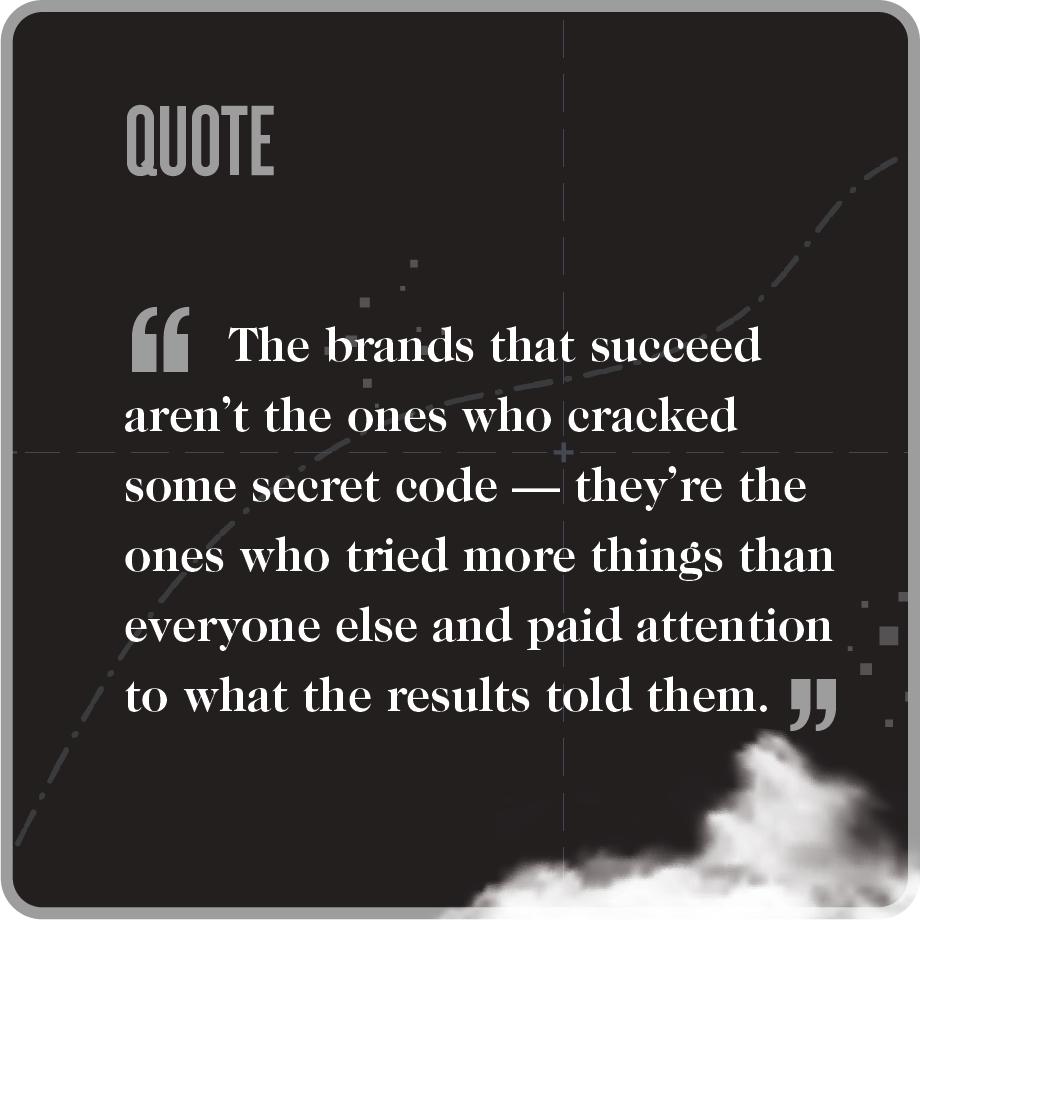
That’s the whole point. Nobody knows which tactic will resonate. Nobody knows if the carousel will outperform the Reel, if the testimonial will beat the product shot, or if the thing that wins will be something nobody even considered. The brands that succeed aren’t the ones who cracked some secret code — they’re the ones who tried more things than everyone else and paid attention to what the results told them. They treated the spend as tuition, not a gamble.
The Real ROI Question
Here’s what I’d love for more people to consider. The question isn’t “will this $500 campaign pay for itself?” The question is: What is the cost of learning nothing?
Because that’s what happens when there’s no investment. Nothing is learned. Not what the audience responds to. Not what messaging converts. Not which demographics engage. Everything stays exactly where it is, banking on the hope that organic reach will magically reverse a decade-long downward trend.
Global social media ad spend hit $219.8 billion in 2024, representing nearly 30% of all digital ad spending. That’s not because every CMO on the planet is wasting money. It’s because the math has been done, and doing nothing turns out to be more expensive.
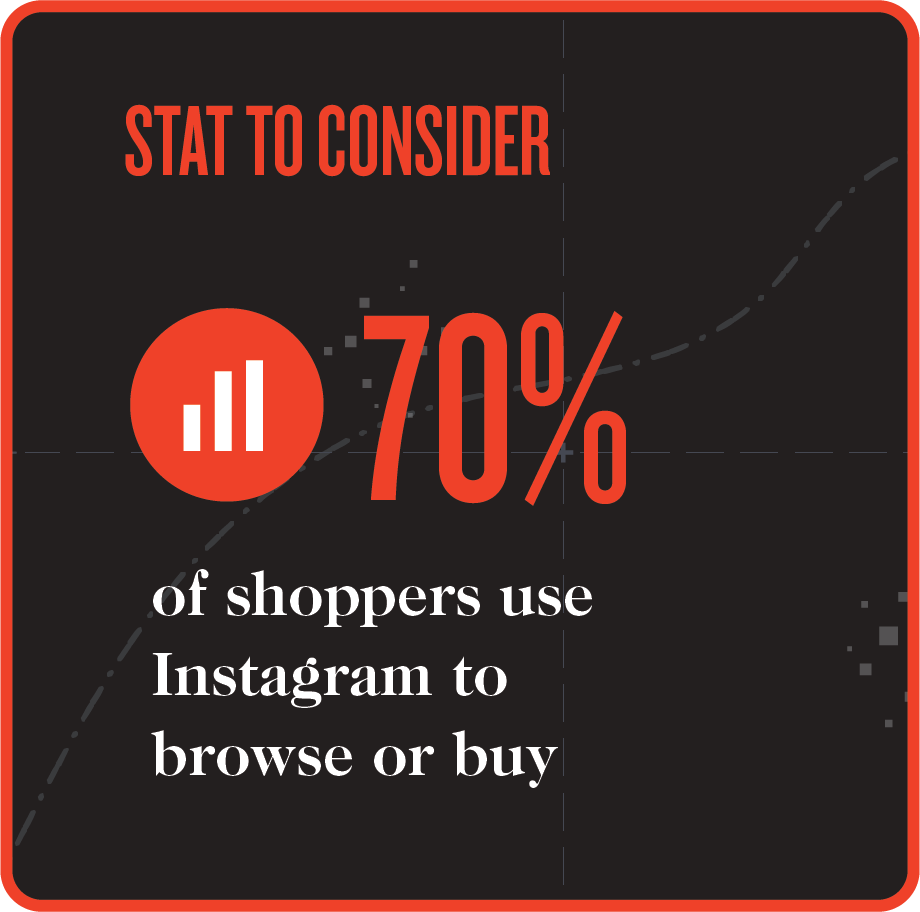
Instagram now has an advertising audience of 1.9 billion people. 61% of users discover new products on the platform. 70% of shoppers use it to browse or buy. The attention is there. The intent is there. The infrastructure is there.
The only thing missing might be the willingness to step in.
Don’t Get Me Wrong
It should go without saying but I have to say it. Of course we want our marketing dollars to be successful and of course we should be good stewards of capital. But part of that, ironically, is the cost required to win. Or as my Dad likes to say, “consider it tuition.”
Marketing Isn’t a Vending Machine
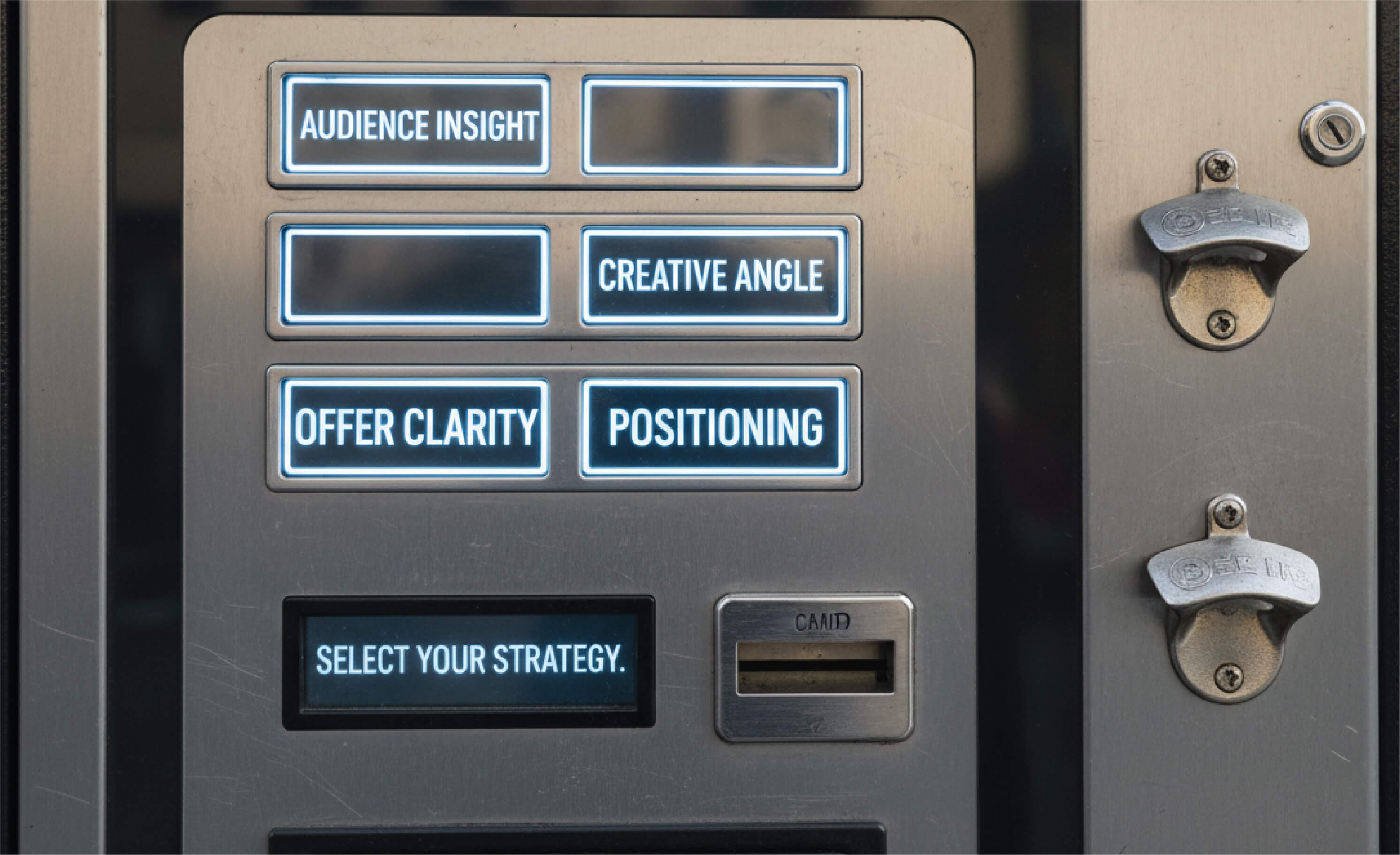
Nobody puts a dollar into a vending machine expecting two dollars back. A dollar goes in, a Coke comes out. The ROI is no longer being thirsty.
Marketing can work the same way. The ROI of a first paid campaign might not be a sale. It might be the discovery that the real audience is 34-year-old women who respond to humor over polish. That single insight could reshape an entire content strategy. That’s worth more than one sale — it’s the foundation of every sale that comes after.
The brands I’ve watched succeed — over 30 years of doing this — are the ones that understood marketing isn’t a transaction. It’s a discipline. Show up. Put in the work. Invest. Learn. Adjust. Compound.
The ones that struggle? The ones focused on never losing a penny in effort or cash simply by not trying. The ROI on that approach is guaranteed and it rhymes with ‘hero.’