

There’s a pattern that plays out in growth-focused organizations more often than anyone wants to admit.
The pipeline starts to slow, leadership starts asking harder questions, and suddenly, marketing is expected to generate results—immediately. Campaigns get rushed, budgets get reallocated, and teams push harder on lead generation in hopes of creating quick momentum. The intention is right, but the timing is off.
By the time urgency shows up, the opportunity to influence the pipeline has already passed.
Demand generation doesn’t operate on demand. It operates on a delay.
What’s often missed in these moments is a simple but critical truth: demand generation does not happen in real time. The pipeline you are trying to accelerate today is the result of decisions, messaging, and visibility built weeks or even months ago. When that reality is not accounted for, even strong teams are forced into reactive execution, chasing immediate results in a system that depends on consistency and lead time. That reality shows up clearly in how marketing actually works: today’s pipeline reflects past activity rather than current effort, reactive campaigns under pressure tend to underperform because they lack runway, buyers require multiple interactions before they are ready to convert, strong pipelines are built through early and intentional strategy, and waiting to build demand creates compounding challenges for both marketing and sales.
Spring is the inflection point where the future pipeline is either built with intention or left to chance.
The Lag Most Teams Don’t Plan For
If you’re responsible for marketing performance, this probably feels familiar. You’re balancing long-term strategy with short-term expectations, trying to create measurable impact while managing limited time and resources.
At the same time, you may be working with leadership that expects marketing to produce results quickly, especially when revenue targets are on the line. From their perspective, investment is underway now, so outcomes should follow quickly.
Both perspectives are valid—and both break down without a shared understanding of timing.
When demand generation starts only after the pipeline becomes a problem, you’re already operating behind the curve.
Demand generation works more like farming than it does like flipping a switch. You cannot plant seeds today and expect to harvest tomorrow. The pipeline you want in the next quarter is shaped by what you chose to plant weeks or months earlier, how consistently you nurtured it, and whether you gave it enough time to grow. The organizations that see steady, predictable growth are not reacting to pressure. They are building and tending to demand long before they need the outcome.
The Rule of 7
Every business has its own rhythm. For some, that pressure hits in Q3. For others, it’s tied to budgeting cycles, seasonal demand, or sales targets. But the pattern is consistent: there is always a window before the pipeline becomes a problem, and that window is where outcomes are determined.
Once you’re inside the pressure, your options narrow quickly. Campaigns get rushed, and expectations shift toward immediate results. The teams that avoid this cycle operate differently because they understand how buying decisions actually happen. They follow the Rule of 7.
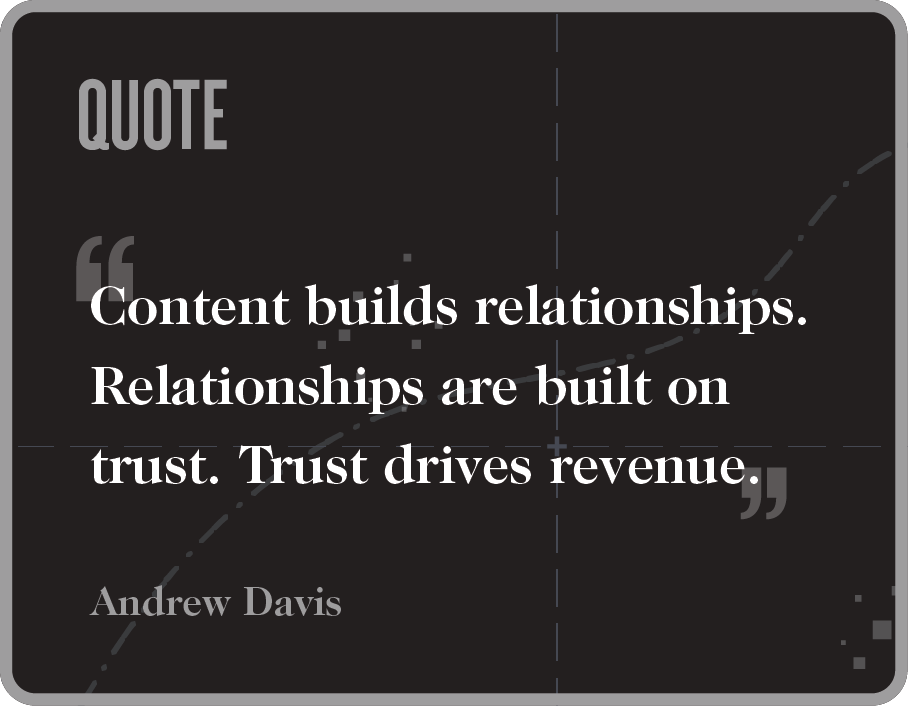
The Rule of 7 explains the principle that most prospects don’t convert the first time they see your brand, or the second. It takes repetition. As leading Marketing author and strategist Andrew Davis puts it, “Content builds relationships. Relationships are built on trust. Trust drives revenue.” That progression does not happen overnight. It is the result of consistent visibility, repeated value, and messaging that meets buyers where they are long before they are ready to act.
That reality changes how you approach marketing. If your pipeline depends on a single campaign or a short burst of activity, you’re asking prospects to make a decision before they’ve had enough exposure to do so confidently. Connect with them multiple times through multiple channels to begin laying the foundation for brand trust and loyalty.
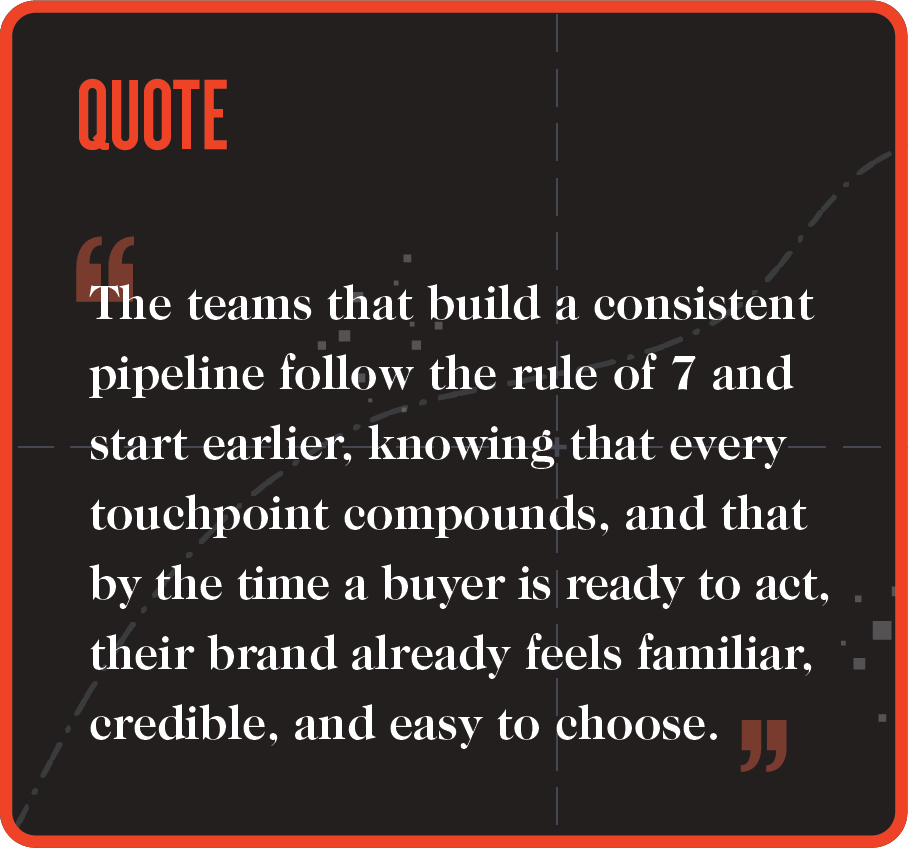
The teams that build a consistent pipeline follow the rule of 7 and start earlier, knowing that every touchpoint compounds, and that by the time a buyer is ready to act, their brand already feels familiar, credible, and easy to choose.
A More Intentional Way to Build Demand
Strong pipelines are not built on one campaign. They come from clear decisions made early and executed consistently.
Start by defining who you want more of. Not more leads, but the right ones. Without that clarity, even strong campaigns fill your pipeline with the wrong opportunities.
Next, sharpen your message. If you cannot clearly explain one call to action, who it helps, and why it matters, your marketing will struggle to perform.
Execution is where discipline matters most. Instead of spreading effort across multiple disconnected tactics, high-performing teams focus on building one strong demand engine and committing to it. That could be a targeted campaign, ongoing content development, or a structured email nurture strategy—but the key is consistency. Visibility builds over time, and without repetition, even strong ideas fail to gain traction.
Finally, measurement has to connect back to the pipeline. Impressions and clicks don’t tell you if demand is being created or what’s driving it. Without attribution, you’re guessing. Once you know what’s actually working, you can strengthen it, repeat it, and scale it with confidence.
The Cost of Waiting
When this work gets delayed, the impact compounds quickly, and sales teams are asked to convert prospects who aren’t fully informed or bought in, which makes every interaction more difficult than it needs to be.
Over time, it creates the perception that marketing is inconsistent or expensive, when the real issue is that it wasn’t given enough runway to work.
You can’t compress months of demand generation into a few days. And when you try, the results rarely justify the effort.
Where Momentum Actually Comes From
The organizations that move into the second half of the year with confidence aren’t the ones doing the most—they’re the ones who started earlier with a clearer plan.
They made decisions about who they’re targeting, aligned around a message that resonates, and committed to executing consistently enough for it to take hold. Because of that, when the pipeline becomes a priority, they’re not starting from zero—they’re building on momentum that’s already in motion.
That’s the difference between reactive marketing and reliable growth.
At the center of it is a simple idea: marketing planning turns chaos into clarity, and clarity turns effort into growth. When you take the time to build demand before you need it, your pipeline becomes more predictable, your team becomes more aligned, and your results become far less dependent on last-minute effort.
Spring isn’t just another quarter.
It’s where the rest of your year gets decided.